ONDA vs Ultherapy: Which Skin Tightening Treatment Is Right for You?
ONDA vs Ultherapy represents two distinct non-invasive body and face contouring technologies, with ONDA using focused microwave energy to heat and destroy fat cells, while Ultherapy delivers microfocused ultrasound to lift and tighten skin by stimulating collagen production. ONDA targets subcutaneous fat layers for reduction, whereas Ultherapy works on the deeper SMAS and dermal layers to achieve a firmer, more lifted appearance without addressing fat. For use, ONDA requires a single session with gradual fat elimination over weeks, while Ultherapy typically needs one to two sessions with results developing over two to three months, both requiring no downtime for the patient. ONDA provides visible circumference reduction and skin tightening at the treated site, whereas Ultherapy offers sagging correction and wrinkle smoothing, making the choice dependent on whether your priority is fat reduction or structural skin lifting.
What Actually Differentiates ONDA and Ultherapy at the Core?
The core difference isn’t heat—it’s the *layer* and *mechanism* of action. ONDA uses focused微波 energy to target and destroy subcutaneous fat cells beneath the skin, which indirectly triggers collagen remodeling from the deep dermis upward. Ultherapy, however, delivers micro-focused ultrasound directly to the SMAS layer—the same structural fascia lifted in a surgical facelift—creating precise thermal coagulation points that tighten and lift over two to three months. So, ONDA excels at contouring and reducing bulk (think jowls or a soft jawline), while Ultherapy is purely about sagging and laxity. *“Which one do I need if my face is both puffy and drooping?”* You’d combine them: ONDA for the fat, Ultherapy for the fibrous lift—they address two separate root causes of aging.
Decoding the Physics: Why One Uses Waves and the Other Uses Ultrasound
The core distinction lies in energy delivery: ONDA employs focused electromagnetic waves, specifically microwaves in the 2.45 GHz range, which heat the dermis volumetrically to a controlled 45–50°C, stimulating fibroblast activity. Ultherapy, conversely, uses high-intensity focused ultrasound (HIFU) to target precise micro-points at 1.5, 3.0, or 4.5 mm depths, bypassing the skin’s surface. ONDA’s waves spread energy across a larger area, making it suitable for uneven or thicker skin, while ultrasound’s precise focal zones create pinpoint coagulation for lifting. Critically, waves have a lower absorption coefficient in fat, protecting adipose tissue, whereas ultrasound energy converts to heat at the focal point, risking discomfort if the target depth is miscalculated. This difference dictates whom each device suits: ONDA for laxity with volume, Ultherapy for sagging with structural support needs.
| Aspect | ONDA (Electromagnetic Waves) | Ultherapy (Ultrasound) |
|---|---|---|
| Energy type | Microwaves (2.45 GHz) | High-intensity focused ultrasound |
| Delivery pattern | Volumetric (broad area) | Focal points (precise depth) |
| Primary mechanism | Uniform dermal heating (45–50°C) | Coagulation at specific tissue layers |
| Fat interaction | Low absorption, minimal effect | Direct thermal at focal zone |
Targeting Different Depths: Where Each Technology Focuses Its Energy
The core differentiation in **targeting different depths** comes down to ultrasonic frequency and focal geometry. Ultherapy delivers focused ultrasound energy precisely at 4.5 mm (deep SMAS), 3.0 mm (superficial muscular aponeurotic system), and 1.5 mm (dermis), using a transducer that creates discrete thermal coagulation points. ONDA, conversely, uses a divergent, defocused wave that heats a broad volumetric band across 2–6 mm, without pinpointing a single layer. This means Ultherapy bypasses the superficial fat to lift structural fascia, while ONDA blankets the entire dermal-subcutaneous junction for bulk collagen remodeling. Consequently, you choose based on depth priority:
- If sagging originates below 4 mm, Ultherapy targets that deep fascial plane.
- If laxity is diffuse with thinning skin, ONDA’s multi-depth dispersion offers more uniform thermal exposure.
- For layered treatment, Ultherapy fragments energy at fixed depths, while ONDA’s wave covers intermediate zones simultaneously.
How Long Do You Wait to See Results From Each Procedure?
For ONDA, the wait is a slower burn—you’ll notice subtle skin tightening within **2 to 3 weeks**, but the real collagen remodeling peaks around **3 months**, with continued improvement up to **6 months** as the body clears fat and firms tissue. Ultherapy, by contrast, offers a sharper early signal: many feel a slight lift within days, yet the definitive, visible result typically arrives between **6 to 12 weeks**, hitting its stride by **3 to 6 months** as ultrasound-heated deep layers knit tighter. The operative difference is your patience threshold—ONDA rewards a delayed, gradual drape, while Ultherapy gives a quicker initial snap.
You’ll see Ultherapy’s first hint at week 1–2, but ONDA’s true payoff only fully lands after a full quarter, so schedule accordingly.
Both demand ~90 days for the majority of their effect, but Ultherapy front-loads the gratification.
Immediate Tightening vs. Gradual Collagen Remodeling: What to Expect Week by Week
Immediate Tightening vs. Gradual Collagen Remodeling creates a two-phase result timeline. With Ultherapy, you feel a slight lift right after the session, but that’s just initial tissue contraction. The real payoff emerges between weeks 4 and 12, as your body rebuilds collagen, peaking around month three. ONDA, however, skips the instant snap; you notice smoothness within days, but the deep tightening unfolds from week six onward, with visible remodeling continuing for up to four months. In short, expect a subtle “quick” effect, then a slow, satisfying firming wave.
- Week 1–2: Mild lift only from Ultherapy; ONDA shows zero visible change.
- Week 4–6: First collagen signs—skin feels denser, not yet tighter.
- Week 8–12: Peak remodeling for Ultherapy; ONDA’s main tone appears.
- Month 4+: Both settle into final, durable firmness.
Understanding the Timeline for Skin Laxity and Wrinkle Improvement
For skin laxity and wrinkle improvement, the timeline diverges sharply between ONDA and Ultherapy. ONDA’s thermal energy stimulates immediate collagen contraction, yielding subtle tightening within 1–2 weeks, but visible laxity reduction peaks around 8–12 weeks as neocollagenesis unfolds. Ultherapy, by contrast, works deeper, with initial lift felt at 4–6 weeks; the maximal wrinkle smoothing typically appears at 3 months, continuing to improve up to 6 months as dermal remodeling progresses. You may notice ongoing firmness changes for up to a year. Neither offers instant results—biologic response dictates the pace. For optimal outcome, schedule your assessment at 8 weeks post-treatment to gauge whether a touch-up session is needed, as your baseline collagen density and age directly affect how quickly you see improvement.
Skin laxity and wrinkle improvement from ONDA emerges earlier (weeks 1–8), while Ultherapy’s deep lift peaks at 3–6 months; both require patience, with final results visible by the 12-month mark.
What Does the Treatment Feel Like? Managing Pain and Comfort Levels
During ONDA vs Ultherapy, the sensation profiles differ sharply. Ultherapy delivers focused ultrasound to deep SMAS layers, producing a distinct, sharp pricking or zapping sensation with each pulse, often described as a “rubber band snap” against the bone. Practitioners typically pre-medicate with oral analgesics and use a vibrating handpiece to distract nerves, but patients rate peak discomfort as moderate-to-high, especially over the jawline and brow bone. In contrast, ONDA uses microwave energy with a cooling ceramic tip, creating a warm, prickly heat that builds gradually across the skin’s surface. Most patients report ONDA as comfortable enough for conversation, with no numbing cream required; the cold tip actively masks deeper thermal buildup. Post-treatment, Ultherapy often leaves lingering tenderness for 24–48 hours, whereas ONDA’s redness and warmth resolve within hours. For low-pain tolerance, ONDA is the clear first choice, while Ultherapy may demand stronger oral sedation or intermittent breaks during the procedure.
Numbing Protocols, Cooling Tips, and Realistic Pain Scores for ONDA

For ONDA, **standard numbing protocols** include a topical anesthetic applied 30–40 minutes prior, with some clinics adding localized cooling air during passes to dull surface sensation. Cooling tips: request a pre-chilled gel pad and ask your practitioner to adjust cryo-intensity upward if you feel heat spikes, since ONDA’s wave energy targets deeper dermal layers while the handpiece tip simultaneously cools the epidermis. Realistic pain scores average 3–5/10—far lower than Ultherapy’s typical 6–8/10—because ONDA uses monopolar radiofrequency without focused ultrasound “ping” points. *Most patients describe ONDA as a “hot vibration” rather than sharp pain, with discomfort peaking only during the first few minutes per zone.* Post-procedure, use a cool cloth for 10 minutes but avoid ice packs directly on numbed skin to prevent frostbite-like irritation.
Sensation Depth and Bone Contact: Preparing for Ultherapy’s Discomfort
Ultherapy’s discomfort escalates sharply when the transducer reaches the periosteum, the fibrous membrane overlying bone. Unlike ONDA’s volumetric heating, which disperses energy through soft tissue, Ultherapy’s focused ultrasound concentrates at precise depths—often 4.5 mm—where the cheekbones, jawline, or brow ridge sit close to the skin. Patients typically feel a hot, aching throb during these bone-contact moments, far more intense than the superficial prickling elsewhere. Preparing for bone-contact stingers requires mental rehearsal: anticipate each pass over the mandible or orbital rim, and request lower energy settings there. Since ONDA lacks this deep bony feedback, patients switching modalities must recalibrate their pain expectations. Breathe slowly, tense calf muscles as a distraction, and ask the clinician to pause between pulses.
**Q: How do I handle the sharp sensation when Ultherapy hits bone?**
A: Tell your provider to reduce fluence near bony prominences, use a numbing agent, and break the treatment into smaller zones so the periosteal sting never compounds.
Which Skin Concerns Does Each Treatment Solve Best?
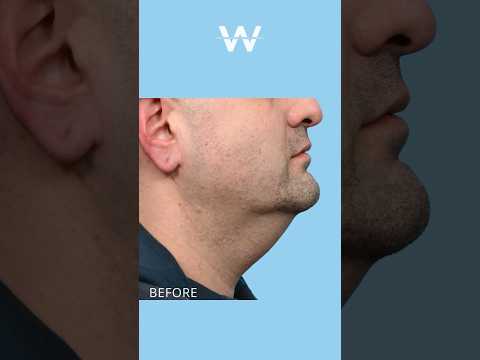
ONDA targets deep subcutaneous fat and fibrous cellulite, making it the superior choice for contouring the lower face, jowls, and submental fullness, as well as smoothing dimpled skin on the thighs and buttocks. Ultherapy, by contrast, is best for lifting and tightening loose, sagging skin on the brow, neck, and jawline, specifically addressing loss of collagen density in the mid-to-deep dermis. For fine lines and crepey texture, Ultherapy excels via micro-focused ultrasound; for stubborn fatty bulges or a “double chin,” ONDA delivers thermal coagulation to shrink adipocytes.
If your concern is sagging without excess fat, choose Ultherapy; if it’s soft-tissue volume with a heavy, puffy appearance, ONDA is the decisive answer.
They rarely substitute—they complement, each solving a different structural aging layer.
When to Choose a Cooling-Wave Approach for Fat Reduction and Fine Lines
Choose a cooling-wave approach when your primary complaint is submental or submandibular fullness with concurrent superficial laxity, rather than deep structural sagging. This method suits patients who want non-thermal fat reduction in the pre-platysma layer while also stimulating dermal collagen for fine perioral and cheek lines, without the downtime of focused ultrasound. It is ideal when the skin has adequate elasticity but the underlying fat pad requires volumetric reduction; if you see advanced ptosis or thick, fibrous fat, Ultherapy’s heat is more appropriate. Crucially, cooling-wave results are subtler and slower, so you need multiple sessions for visible fine-line remodeling. The approach is best avoided when patients expect immediate lifting or have cold-triggered inflammatory responses.
- Select cooling-wave when the target is localized fat (chin, jowl) and fine wrinkles ONDA lifting seoul coexist in the same zone.
- Prefer it over Ultherapy if the patient is risk-averse to thermal injury or has thin, reactive skin.
- Use it as a maintenance option after surgical or ultrasound lifting, to address residual fat without further deep heating.
- Skip it if the patient’s primary concern is an acute nasolabial fold or brow ptosis, which requires mechanical lifting.
Prioritizing Deep Lifting: Why Ultherapy Suits Jowls, Brows, and Neck Crepe-iness
When comparing ONDA and Ultherapy for facial aging, the key differentiator lies in treatment depth. ONDA’s radiofrequency primarily tightens superficial dermal layers, making it better for fine texture, whereas Ultherapy’s focused ultrasound penetrates the SMAS and deep fascial planes—exactly where jowl sagging, brow descent, and neck crepe-iness originate. For these gravitational concerns, you need mechanical lift, not just collagen remodeling on the surface. Ultherapy delivers thermal coagulation points at 3.0–4.5 mm, contracting the structural scaffolding that holds the lower face and brows. Crepey neck skin, often accompanied by platysmal laxity, responds to this deep lift because the ultrasound targets the same fibrous layer that surgical lifts address, minus incisions. ONDA, by contrast, leaves the deep fascia undertreated. Therefore, if your primary complaint involves sagging vectors rather than pore size or surface dullness, prioritize Ultherapy for jowls and brows.
Q: Why does Ultherapy outperform ONDA for jowls and brow ptosis?
A: Because jowls and brows are suspended by the SMAS and superficial temporal fascia—tissues located too deep for ONDA’s radiofrequency to effectively heat. Ultherapy’s ultrasound beam is the only non-invasive modality here that reaches those planes with sufficient thermal energy to cause immediate tissue contraction and long-term neocollagenesis. Without that depth, you can tighten the skin envelope but leave the underlying sagging structure untouched. For crepey neck skin, the same principle applies: the crepe texture is secondary to the loss of deep cervical fascia support, so lifting that layer visually smooths the overlying skin. Choose Ultherapy whenever the dominant problem is descent, not just surface irregularity.
How Many Sessions Do You Need and What Is the Downtime Like?
For most patients, ONDA requires a single session to achieve noticeable fat reduction and skin tightening, though a touch-up is occasionally suggested for larger areas. In contrast, Ultherapy typically needs one to three sessions spaced months apart, as its collagen-building response is gradual and cumulative. Regarding downtime, ONDA is virtually zero—expect mild redness or warmth for a few hours, then immediate return to normal activities. Ultherapy also has minimal downtime, but you may experience slight tenderness, swelling, or tingling for up to a few days, with occasional temporary numbness. The real difference is timeline: ONDA delivers faster visible change from one visit, while Ultherapy’s results unfold over 2–3 months, meaning you must budget for follow-up appointments. Choose ONDA for fewer visits and near-instant recovery; choose Ultherapy only if you accept multiple sessions for deeper, longer-term lift.

Single-Session Protocols vs. Staggered Treatment Plans: Planning Your Calendar
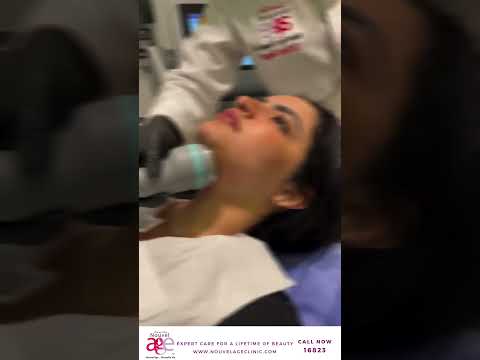
Choosing between a single-session protocol and a staggered treatment plan for ONDA versus Ultherapy hinges on your calendar, not just your skin. Ultherapy typically delivers its full result in one 60–90 minute appointment, requiring you to block out only that day for mild swelling and possible tingling. ONDA, however, often works best as a staggered treatment sequence, where two to three sessions spaced three to four weeks apart allow progressive wave energy to tighten deeper layers without cumulative downtime. For planning:

- Book Ultherapy as a one-off event, reserving 24–48 hours for minor redness.
- For ONDA, allocate three separate half-day blocks, with each session requiring no social downtime.
- Align spaced ONDA visits with weekends or lighter workweeks to avoid scheduling fatigue.
Your calendar choice directly dictates how soon you see results and how much recovery time you must pre-plan.
Redness, Swelling, or Bruising: Comparing Recovery Expectations Side-by-Side
After ONDA, redness and swelling typically peak within the first 24 hours and resolve by day three, with bruising rare unless higher energy is used near sensitive areas. In contrast, Ultherapy often produces immediate mild redness that fades within hours, but swelling may develop gradually over two to three days and last up to a week. Bruising is more common with Ultherapy, especially along the jawline or neck, and can persist for seven to ten days. For recovery expectations, ONDA favors faster visible redness resolution, while Ultherapy demands a longer window for swelling and bruising to fully settle.
Who Is a Poor Candidate for Each Device?
A poor candidate for ONDA is anyone with thin, delicate skin or significant laxity, as its deep dermal heating targets fat and collagen but can’t tighten sagging tissue—if you’re expecting a lift, ONDA will disappoint. Conversely, Ultherapy is a bad fit for those with very low body fat in the face, because its focused ultrasound energy needs a fat layer to work safely; too little means risk of bone pain or uneven results. Also skip Ultherapy if you have active acne or metal implants near the treatment zone, since the heat can aggravate inflammation or interfere with energy delivery. Q: Who fails with ONDA? A: Someone wanting dramatic skin tightening, not just texture smoothing—that’s Ultherapy’s job. Ultimately, if you want volume reduction or have laxity, ONDA is wrong; if you have thin skin or fillers, Ultherapy is risky.
Red Flags for ONDA: Thin Skin, Metal Implants, and Certain Fillers
When weighing ONDA vs Ultherapy, your skin and medical history matter. For ONDA, thin skin is a major red flag—the radiofrequency heats deeper layers, and if your dermis is too fragile, you risk uneven fat loss or contour irregularities. Metal implants, especially dental ones or facial hardware, can concentrate the energy and cause painful hotspots or burns. Likewise, certain fillers—particularly older, non-biodegradable types like silicone or PMMA—can absorb heat unpredictably, leading to swelling or nodule formation. If you have any of these, Ultherapy’s ultrasound might be safer, since it bypasses metal and targets tighter tissue planes. A quick screening protocol:
- Check skin thickness with a pinch test
- List all implants and filler brands
- Ask for a patch test on a small area
Always disclose prior cosmetic procedures before booking.
Ultherapy Contraindications: Loose Fat Pads, Severe Sagging, and Pre-Existing Nerve Issues
Ultherapy is contraindicated when loose fat pads and severe sagging exceed the depth or tension that focused ultrasound can safely lift, as the energy cannot adequately anchor deep laxity and may worsen the appearance of jowling. Pre-existing nerve issues, such as trigeminal neuralgia or facial neuropathy, pose a direct risk because ultrasound heating can irritate or damage compromised neural pathways, leading to prolonged numbness or dysesthesia. Unlike ONDA, which treats superficial fat without targeting the SMAS or nerve-rich planes, Ultherapy’s deeper penetration makes these conditions absolute cautions. Even mild nerve hypersensitivity can turn a routine treatment into a source of chronic pain. Candidates with these presentations should avoid Ultherapy and instead explore surgical or non-thermal alternatives that do not stress structural laxity or neural tissue.
Ultherapy contraindications center on loose fat pads, severe sagging, and pre-existing nerve issues, all of which increase risk of poor lift or neural damage, while ONDA avoids these depths entirely.
How Do You Combine Them for a Full-Face Progression?
For a full-face progression, think of ONDA as your deep tissue sculptor and Ultherapy as your foundational lifter. Start with ONDA first, targeting the lower face and jawline to melt stubborn fat and tighten skin from within, then wait four to six weeks before Ultherapy. This lets the heat-induced collagen remodeling from ONDA settle, so Ultherapy can then focus on the upper face—brow, cheeks, and neck—delivering its focused ultrasound to lift and firm sagging skin at a shallower, more precise depth. The trick is to map out zones: ONDA for the jowls and double chin, Ultherapy for the mid-face and brow. Doing them in reverse risks over-treating the same area, causing unnecessary swelling. **Can I do them in the same session?** No—always separate them by at least a month to avoid overheating tissues and to let each treatment’s effects be evaluated individually for a safer, more balanced outcome.
Sequencing Treatments: Which One Goes First and Why the Spacing Matters
For a full-face progression, sequencing begins with Ultherapy’s deep foundational lift, targeting the SMAS and deep dermis to create structural support. Because Ultherapy delivers heat at 65–70°C, it initiates immediate collagen contraction and a longer neocollagenesis cascade. ONDA, using bipolar radiofrequency with a cooling tip, fractionally heats the superficial and mid-dermis—so applying it second safely layers volumetric smoothing over that new scaffolding. Spacing matters critically: the skin’s inflammatory and remodeling phases overlap, meaning you must allow four to six weeks between sessions. This window prevents overtreatment, lets heat-shock proteins settle, and avoids compromising fibroblast activity, while still timing ONDA to ride the tail of Ultherapy’s collagen surge—maximizing tightening and texture without risking fibrosis or prolonged erythema.
- Schedule Ultherapy first to establish lift; reserve ONDA for a second pass on lax, textured zones like cheeks and neck.
- Wait 4–6 weeks so the collagen response peaks before adding ONDA’s volume effect.
- Never stack on the same day—thermal overlap can blunt results and double downtime.
- Reverse order only if skin is thin or painful to treat; then ONDA first, Ultherapy after 8 weeks.
Targeting Three-Dimensional Aging: Where ONDA Complements and Where Ultherapy Carries the Load
Targeting three-dimensional aging requires a deliberate division of labor between thermal and ultrasound energy, and that is where ONDA and Ultherapy prove complementary rather than competitive. ONDA addresses the volumetric, deep-fat layer—the sagging, doughy midface and jowls that create a heavy, deflated look—by inducing controlled hyperthermia to tighten the fibrous septae and shrink adipose bulk from within. Ultherapy carries the load on the superficial musculoaponeurotic system (SMAS) and dermal plane, using focused ultrasound to lift the brow, sharpen the jawline, and reinforce structural support. Together, they target different depths in the same session: ONDA remodels the deeper architecture for a smoother, fuller contour, while Ultherapy anchors the overlying tissue for visible lift. This is **strategic depth-stacking for three-dimensional facial rejuvenation**.
- ONDA’s bulk-reduction effect directly counters age-related volume gain in the lower face, which Ultherapy cannot shrink.
- Ultherapy’s SMAS lift provides the upward vector that keeps ONDA’s volumetric tightening from looking flat or deflated.
- Sequencing ONDA first softens tissue density, allowing Ultherapy’s ultrasound waves to penetrate with greater precision and less resistance.
What Should You Ask During a Consultation to Secure the Best Outcome?
To secure the best outcome when choosing between ONDA and Ultherapy, ask your practitioner to specify which technology targets your primary concern: ask whether your laxity is best addressed by ONDA’s deep dermal heating for fat reduction and mild tightening, or Ultherapy’s focused ultrasound for structural SMAS lift. Request a side-by-side assessment of your skin thickness and fat distribution to see which device offers a realistic result for your anatomy. Ask directly about the expected timeline for results, noting that Ultherapy often shows progressive collagen remodeling over months, while ONDA yields earlier contour changes. Inquire about pain thresholds—ONDA uses bulk heating with cooling, whereas Ultherapy can be sharper—and ask for a patch test on your jawline. Nuancedly, ask how many sessions the practitioner anticipates for your specific skin quality, since most marketing claims assume average age and elasticity, not your actual tissue response. Finally, request their protocol for treating the lower face versus neck, as energy depths differ significantly between the two systems.
Checklist Questions on Energy Levels, Tip Sizes, and Prior Experience With Your Specific Skin Type
When comparing ONDA versus Ultherapy, your consultation checklist must probe how energy levels are calibrated for your tissue thickness, since Ultherapy’s deeper micro-focused ultrasound requires higher settings than ONDA’s volumetric radiofrequency. Ask precisely which tip size the provider will use: ONDA’s 2cm tip penetrates superficial fat, while Ultherapy’s 1.5–4.5mm transducers target different dermal depths—mismatched sizing wastes your session. Most critically, verify their prior experience with your specific skin type, because melanin-rich skin absorbs Ultherapy energy differently, risking hyperpigmentation, whereas ONDA’s cooling tip allows safer titration. Request before-and-after photos from patients matching your Fitzpatrick level and ask how they adjusted joules for your laxity grade. This isolates whether their proficiency aligns with your anatomical realities.
Requesting Before-and-After Images of Similar Face Shapes and Understanding Revision Policies
When weighing ONDA vs Ultherapy, ask to see before-and-after photos of people whose face shape matches yours—oval, square, or round—because results are dramatically different depending on your bone structure and fat distribution. A narrow face won’t respond like a fuller one, so real-world examples matter more than marketing claims. Then, dig into the revision policy for each device: ONDA often includes a touch-up session within a few months, while Ultherapy typically charges full price for any follow-up. Clarify whether “results” mean visible lift or just skin tightening, and get the timeframe for judging success in writing. This protects you from surprise costs and ensures you’re not left underwhelmed by a treatment that needs a second pass to satisfy you.